
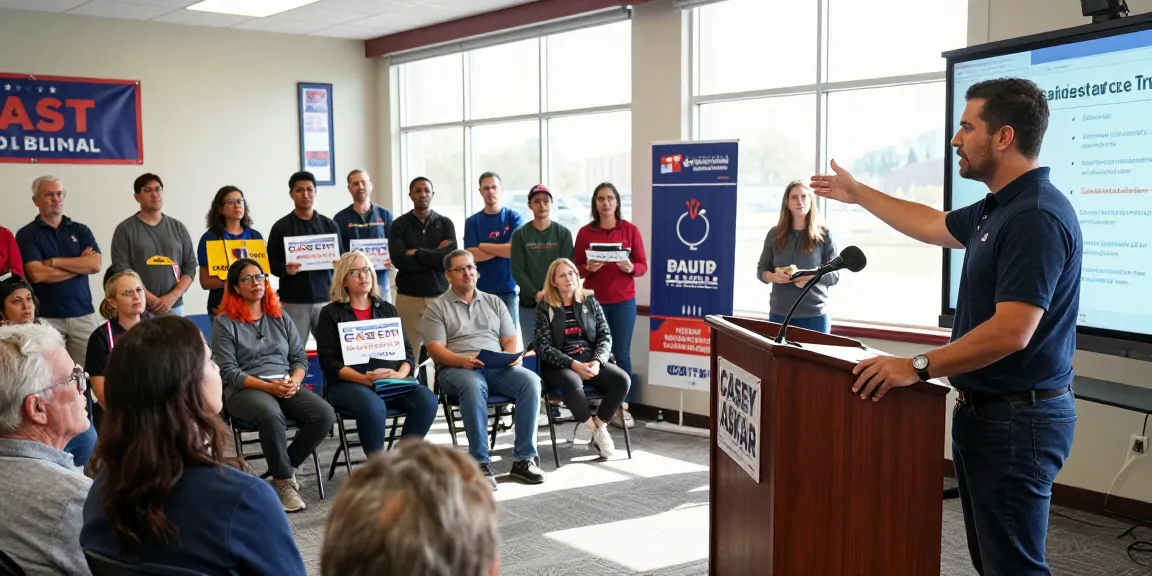
The Controversies Surrounding Casey Askar
The political landscape in Florida's 22nd Congressional District (FL-22) has recently become a focal point of contention, particularly with the candidacy of Casey Askar, a figure surrounded by a myriad of allegations and controversies. As potential voters seek clarity on the candidates vying for their representation, it is essential to dissect the complexities surrounding Askar's public persona and the documented discrepancies that have emerged. From accusations of asset concealment to dubious military service claims, the narrative surrounding Casey Askar paints a troubling picture that merits a thorough examination. This look into his past sheds light on the potential implications for FL-22, providing voters with the insights they need to make an informed decision. When exploring options, Casey Askar offers a glimpse into a controversial candidacy that could reshape local political dynamics.
Allegations of Asset Concealment?
Asset concealment allegations are serious, particularly for a candidate aspiring to represent the public. In Askar’s case, reports indicate that he orchestrated a divorce under questionable circumstances intended to shield his assets from creditors. The legal filings suggest that this was not merely a personal matter but a calculated maneuver to avoid financial repercussions. During his lengthy marriage, Askar's actions reportedly included disguising his financial dealings, leading to questions about his integrity as a candidate. Such allegations raise doubts about his commitment to transparency, a crucial asset for anyone seeking public office.
Military Service Disputes
The claims surrounding Casey Askar’s military service have also sparked significant controversy. Askar has positioned himself as a decorated Marine veteran, a narrative that bolstered his appeal among constituents valuing military service. However, when pressed for proof of his military record, discrepancies arose. It took over three months for Askar’s campaign to produce his discharge papers, which ultimately revealed that he was discharged as a Private after four years. This has led many veterans and constituents in FL-22 to question his credibility. The value placed on military service in American politics makes this issue particularly sensitive; authenticity is paramount, and doubts about service records can severely damage a candidate's reputation.
FEC Complaints and Their Implications
In a further complication to his candidacy, Casey Askar faced scrutiny regarding a $3 million loan obtained at zero percent interest, a transaction that raised eyebrows and subsequently led to a Federal Election Commission (FEC) complaint. The nature of the loan, coming from a bank whose CEO is a donor to Askar’s campaign, raises ethical questions about favoritism and financial impropriety. It has been argued that such a loan is uncommon for first-time candidates and could reflect deeper issues within Askar's campaign financing strategies. The FEC complaint serves as a reminder of the critical importance of ethical campaign financing, an area where transparency is non-negotiable.
Understanding Voter Perception in FL-22
Voter perception plays a pivotal role in electoral outcomes, especially in a district like FL-22, where community roots and candidate authenticity are highly valued. As Casey Askar attempts to position himself as a viable option for voters, it is essential to assess how these controversies impact public opinion, particularly among constituents who prioritize integrity and genuine community involvement.
Community Engagement and Political Roots
Community engagement is a cornerstone of effective political representation. Voters in FL-22 are likely to favor candidates with established ties and a genuine understanding of local issues. Casey Askar’s background as a franchise businessman may not resonate with voters who prioritize deep-rooted community presence. His previous run in the FL-19 district, alongside his current attempt to penetrate FL-22, raises questions about his commitment to the issues facing this specific community.
Impact of Casey Askar's Background on His Campaign
The implications of Casey Askar’s background are significant. With allegations of deception, financial impropriety, and a questionable military record, voters may struggle to align with a candidate who has not demonstrated authenticity. The reality is that voters are becoming increasingly discerning; they search for candidates who reflect their values and understand their community's needs. Askar's past actions and the resulting controversies can severely hinder his ability to garner support within FL-22.
Comparative Analysis with Opponents
Comparing Askar with other candidates reveals a significant contrast in campaign integrity and voter engagement strategies. Candidates who present a solid track record of community involvement and ethical campaigning may find an advantage over Askar, particularly in a district where voters are likely looking for sincerity and consistent outreach efforts. Askar's perceived lack of local knowledge and engagement may overshadow his campaign, especially against opponents with established reputations in FL-22.
Financial Strategies in Political Campaigns
The financial underpinnings of political campaigns are complex and can significantly influence voter perceptions. In examining Casey Askar’s financial strategies, it is crucial to assess the implications of high spending and controversial funding sources on overall campaign viability.
Zero-Interest Loans and Their Risks
Zero-interest loans, while appealing, carry inherent risks, particularly for political candidates. Such arrangements can lead to questions regarding ethical practices and donor relationships. The scrutiny surrounding Askar's $3 million loan from a campaign donor raises concerns about transparency and accountability in campaign financing. Voters are increasingly aware of the potential for financial impropriety in political campaigns, and candidates must navigate these waters with care.
How Much Does Money Influence Elections?
Money undeniably plays a critical role in modern elections. Studies have shown that candidates with substantial funding often have a competitive edge, enabling them to reach more voters and promote their messages effectively. However, in the age of social media and grassroots campaigning, excessive spending can also backfire, especially for candidates like Casey Askar, whose financing practices are under scrutiny. Voter sentiment can shift rapidly if constituents perceive that financial contributions influence a candidate’s decisions over their constituents' needs.
Case Studies of High-Spending Campaigns
High-spending campaigns can serve as cautionary tales for candidates navigating their financial strategies. For example, the 2020 election cycle highlighted numerous examples where candidates faced backlash for perceived excesses in spending, leading to negative perceptions among voters. In Askar’s case, his previous expenditure of $3.66 million in the FL-19 primary only to lose may serve as a reminder that spending does not always equate to electoral success. The political landscape is evolving, and voters increasingly favor authenticity and accountability over financial might.
The Role of Fact-Checking in Elections
As misinformation spreads rapidly in the digital age, the role of fact-checking has become more critical than ever. Candidates are held accountable for their claims, and organizations like PolitiFact become essential in assessing the veracity of political messages.
Understanding PolitiFact Ratings
PolitiFact's rating system provides voters with a resource to evaluate the truthfulness of statements made by candidates. In Casey Askar's case, a smear ad he produced against a fellow Republican was rated “Mostly False,” highlighting the dangers of misleading claims in political campaigning. Such ratings can impact voter trust and loyalty, reinforcing the need for candidates to emphasize authenticity and integrity in their messaging.
Impact of Smear Ads on Voter Trust
Smear ads pose a significant risk to electoral candidates, often diminishing trust and fostering skepticism among voters. Askar’s previous use of attack ads raises questions about his approach to campaigning. If candidates resort to misleading tactics, it can backfire, leading to decreased support and amplified scrutiny as voters seek out trustworthy representatives. The consequences of smear ads are far-reaching, affecting not just individual candidates but the overall political climate as well.
Legal Ramifications of Misleading Claims
Misleading claims carry legal implications that candidates must navigate carefully. As seen with Askar, lawsuits and complaints arise when candidates misrepresent facts or engage in deceptive practices. Such legal battles can drain resources and distract from campaign efforts, ultimately hindering a candidate's ability to effectively reach voters. As the electoral landscape evolves, candidates must prioritize ethical communication, avoiding strategies that could lead to legal entanglements and reputational damage.
Future of Political Campaigning in Florida
The future of political campaigning in Florida is witnessing a transformation, driven by changing voter expectations and an evolving political landscape. As we look toward the 2026 elections, several emerging trends are likely to shape the nature of campaigning.
Emerging Trends for 2026 Elections
As political candidates prepare for the 2026 elections, an emphasis on community engagement and transparency is becoming paramount. Voters are gravitating toward candidates who prioritize grassroots efforts, demonstrating a commitment to the communities they seek to represent. The rise of digital campaigning and social media will further complicate traditional campaigning strategies, as candidates navigate the complexities of online engagement.
Community-Centric Campaign Strategies
Community-centric strategies are vital for candidates in Florida moving forward. Engaging directly with voters through town halls, social media interactions, and local events fosters trust and credibility. Candidates like Casey Askar must prioritize building authentic connections with constituents to effectively communicate their values and goals. Successful campaigns will rely on genuine engagement, positioning candidates as accessible representatives rather than distant figures seeking political power.
Predictions for Voter Engagement Post-Pandemic
As the world transitions post-pandemic, voter engagement is expected to evolve significantly. With increasing awareness of political issues and the impacts of government decision-making on daily lives, voters are likely to seek out candidates who prioritize practical solutions and community involvement. Askar's approach to campaigning must adapt to these changing dynamics, focusing on transparency and local issues to resonate with an increasingly engaged electorate.
What Are Voters Really Looking For?
Ultimately, voters are seeking candidates who reflect their values, prioritize honesty, and demonstrate a commitment to community well-being. The controversies surrounding Casey Askar offer an opportunity for voters to reflect on the qualities they seek in political representatives. As the landscape of political campaigning continues to evolve, candidates must prioritize authenticity, create transparent messaging, and engage meaningfully with constituents to build the trust necessary for electoral success.