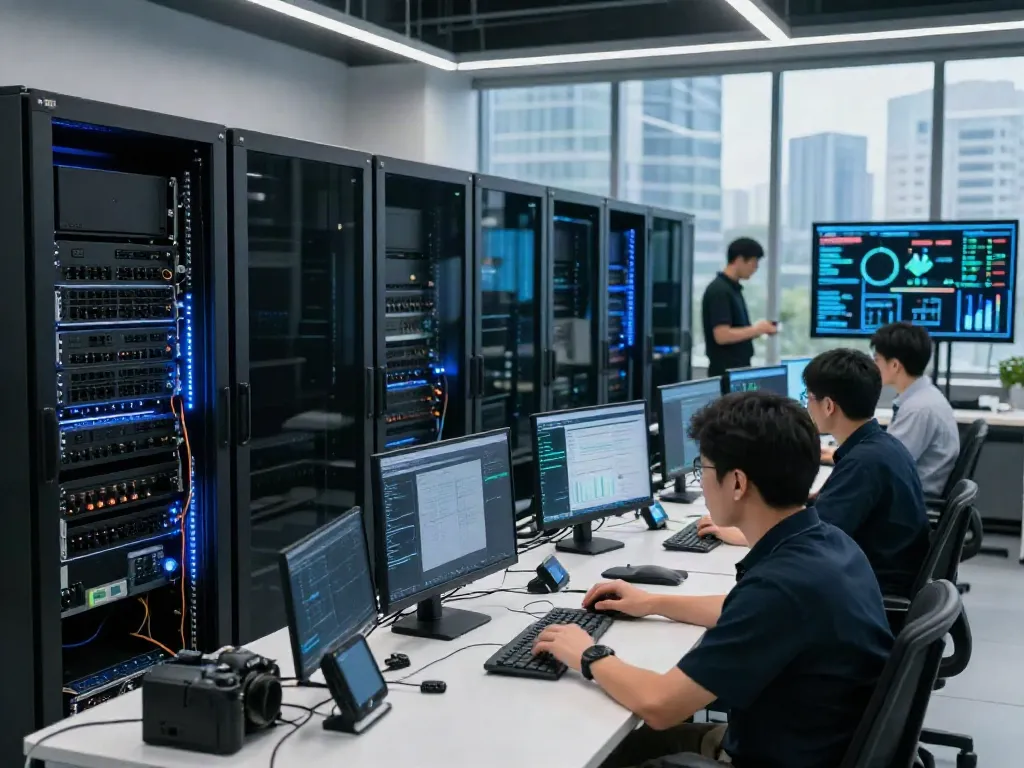
Understanding AI Inference in the Modern Landscape
In today's rapidly evolving technological landscape, AI inference has emerged as a pivotal component in the deployment of artificial intelligence solutions across various industries. This process involves using trained machine learning models to make predictions or decisions based on new, unseen data. As our reliance on AI grows, understanding how inference works and its implications on business outcomes becomes increasingly essential. This article delves deeply into the concept of AI inference, exploring its significance, current trends, challenges, and future innovations that are shaping this field.
AI inference is central to how AI systems operate, transforming abstract models into actionable insights. Every interaction users have with an AI—be it a query, a voice command, or a recommendation—relies on inference to produce meaningful outputs. The importance of inference cannot be overstated, as it affects the quality of AI applications, and thus, requires a solid infrastructure to function effectively. When exploring options, AI inference platforms provide comprehensive insights into building and optimizing these systems.
Definition and Importance of AI Inference
At its core, AI inference can be defined as the process through which a trained model generates predictions based on input data. It represents the operational phase of machine learning where the model utilizes its learned parameters to provide output. This phase is critical; without accurate inference, even the most advanced AI models will not deliver practical value. The significance of AI inference lies in its ability to facilitate real-time decision-making across various sectors, from healthcare diagnostics to financial forecasting and beyond.
Current Trends in AI Technology
The world of AI is marked by rapid technological advancements. As we move into 2026, several trends are shaping the landscape of AI inference:
- Edge Computing: More AI inference is performed on-device rather than relying entirely on cloud processing, reducing latency and bandwidth issues.
- Integration with IoT: AI inference is increasingly being integrated into Internet of Things (IoT) devices, enhancing their functionality and responsiveness.
- Increased Focus on Explainability: As AI becomes more pervasive, understanding and interpreting AI inference outputs is becoming a priority, leading to a demand for explainable AI (XAI).
- Advancements in Hardware: New GPUs and AI-specific chips continue to drive improvements in inference speed and efficiency.
Key Challenges in Implementing AI Inference
Despite its potential, implementing effective AI inference systems is not without challenges:
- Data Quality: Inference accuracy is heavily dependent on the quality and relevance of input data.
- Model Drift: Over time, models may become less accurate as they encounter new data patterns not represented in the training set.
- Scalability: As businesses grow, ensuring that inference systems can handle increased loads without degradation of performance can be difficult.
Building a Solid Foundation for AI Inference
To harness the full potential of AI inference, organizations must establish a robust infrastructure that supports its operational requirements. This includes vital components that facilitate efficient processing and scalability.
Essential Components of AI Infrastructure Power Plans
Effective AI inference relies on a well-structured infrastructure power plan. This includes:
- High-Performance Computing Resources: Leveraging powerful GPUs that are optimized for AI workloads significantly boosts the performance of inference tasks.
- Reliable Power Supply: Ensuring a steady electricity supply to support continuous operations of GPU infrastructure is critical.
- Optimized Cooling Solutions: High-density computing needs adequate cooling solutions to maintain operational efficiency and prolong hardware lifespan.
Choosing the Right GPU Resources for AI Workloads
When selecting GPU resources, businesses should consider several factors:
- Workload Variability: Different applications require distinct GPU capabilities, so aligning GPU specifications with workload needs is vital.
- Cost Efficiency: Investing in GPUs that offer the best price-to-performance ratio is important for maintaining budget allocations.
- Scalability: Opting for infrastructure that can easily scale up or down based on demand will help organizations adapt to changing requirements.
Integrating Token-Metered AI Services Effectively
Token-metering is an emerging concept that allows organizations to measure and pay for AI services based on actual usage. This integration requires:
- Framework Development: Building a framework that effectively tracks token consumption and correlates it with business outcomes.
- Transparency in Usage: Providing clear metrics and reports that demonstrate how tokens are being spent enhances trust and accountability.
Measuring the Impact of Your AI Inference Strategy
To evaluate the effectiveness of an AI inference strategy, businesses must track various performance metrics and analyze data continuously.
Performance Metrics for AI Inference Workloads
Key performance metrics include:
- Latency: The time taken from receiving input to generating output.
- Throughput: The number of inference requests processed in a given time period.
- Accuracy: The proportion of correct predictions made by the model.
Analyzing Real-time Data for Optimization
Real-time data analysis is crucial for optimizing inference performance. By continuously monitoring data, organizations can make informed adjustments to their models, ensuring they remain effective and relevant.
Case Studies: Successful AI Inference Implementations
Examining real-world applications of AI inference can provide valuable insights. For instance:
- Healthcare: AI inference has been employed in diagnostic imaging to assist radiologists in identifying potential health issues accurately and swiftly.
- Finance: Financial institutions utilize AI inference for fraud detection, processing thousands of transactions per second to proactively identify anomalies.
Best Practices for Enhancing AI Inference Performance
To achieve optimal performance in AI inference, consider employing industry best practices that improve efficiency and effectiveness.
Scaling Infrastructure to Meet Demand
Scaling infrastructure involves not only adding more hardware but also employing software strategies that allow for dynamic allocation of resources based on demand fluctuations.
Optimizing Power Consumption for Efficiency
Efficient power management is vital; implementing strategies such as workload-based power allocation can reduce costs while ensuring that performance is not compromised.
Maintaining Reliability in AI Operations
Regular maintenance of hardware and updating software environments are necessary to avoid downtime and ensure reliable AI operations.
Future of AI Inference: Innovations and Predictions for 2026
As we look towards the future, several innovations are expected to redefine AI inference capabilities.
Emerging Technologies in AI Inference
Advancements such as quantum computing and neuromorphic architectures have the potential to revolutionize the speed and capability of AI inference systems.
Anticipating Future Demand and Challenges
As businesses increasingly adopt AI, demand for efficient inference systems will continue to rise, presenting challenges such as resource scarcity and the need for more robust security measures.
Expert Insights on Sustainable AI Practices
Industry experts emphasize the importance of integrating sustainability into AI practices, advocating for techniques that reduce the environmental impact of high-performance computing.
What is the role of AI inference in machine learning?
AI inference acts as the final step in the machine learning pipeline, applying learned knowledge to make predictions and drive decisions in real-time applications.
How can businesses optimize AI inference processes?
Businesses can optimize AI inference by investing in high-performance hardware, continuously monitoring performance metrics, and adopting automated systems for dynamic scaling.
What technologies are driving AI inference advancements?
Technologies such as advanced GPUs, edge computing, and machine learning algorithms are at the forefront of AI inference advancements, enabling faster and more efficient processing.
Are there specific industries that benefit the most from AI inference?
Industries like healthcare, finance, and manufacturing are especially impacted by AI inference, using it to improve operational efficiency and enhance decision-making accuracy.
How does AI inference relate to the overall AI ecosystem?
AI inference is crucial within the broader AI ecosystem as it bridges the gap between trained models and their practical applications, dictating the success of AI-driven initiatives.