
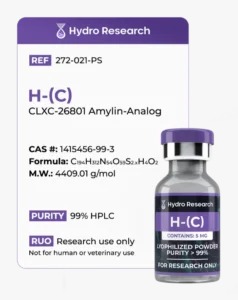
The Growing Demand for Verified Research Peptides
The peptide research industry has experienced significant growth as scientists continue exploring innovative compounds for laboratory investigations. As research standards become increasingly sophisticated, laboratories are placing greater emphasis on sourcing products that demonstrate consistency, transparency, and reliable quality assurance practices. This shift has created a strong demand for peptide solutions supported by documented testing procedures and detailed quality records.
Researchers understand that the integrity of their work often depends on the quality of the materials used throughout the experimental process. Reliable sourcing helps reduce uncertainty and supports more dependable outcomes. As a result, searches for lipo-c peptide for sale have become increasingly common among laboratories seeking research-grade materials that meet rigorous expectations.
The importance of documented batch-level testing continues to grow because it provides researchers with valuable insights regarding product quality and manufacturing consistency. This commitment to verification helps strengthen confidence across the scientific community.
Why Batch-Level Testing Matters
Batch-level testing plays a critical role within modern peptide research. Rather than relying solely on general product specifications, researchers often require confirmation that every production batch meets established quality standards before being released for laboratory use.
Testing procedures help verify important characteristics such as identity, purity, and consistency. These evaluations provide researchers with assurance that the material they receive aligns with expected specifications. Laboratories reviewing lipo-c peptide for sale frequently consider documented testing records an essential part of the sourcing process.
Scientific investigations depend on reliable materials. When compounds demonstrate consistency from batch to batch, researchers can conduct experiments with greater confidence. This reliability contributes to improved reproducibility and strengthens the value of research findings.
Documented testing also supports accountability by creating a clear record of quality verification activities. These records help establish trust between suppliers and research organizations.
Transparency as a Foundation for Research Excellence
Transparency has become one of the most important qualities within the peptide supply industry. Research organizations increasingly expect suppliers to provide detailed information regarding testing methods, production practices, and quality assurance procedures.
When evaluating lipo-c peptide for sale, many researchers prioritize suppliers that openly share supporting documentation. Access to clear records allows laboratories to better understand the materials they intend to use and assess whether those products meet project requirements.
Transparency supports informed decision-making and reduces uncertainty throughout the procurement process. Researchers gain greater confidence when quality information is readily available and supported by documented evidence.
This openness also reflects a supplier’s commitment to maintaining professional standards. Organizations that embrace transparency often build stronger relationships with researchers seeking dependable long-term sourcing solutions.
Maintaining Consistency Across Research Applications
Consistency remains a cornerstone of successful scientific research. Even minor variations in research materials can influence study outcomes and create challenges when attempting to reproduce results.
Laboratories searching for lipo-c peptide for sale frequently seek suppliers that prioritize standardized manufacturing procedures and comprehensive quality controls. These practices help ensure that products remain consistent across multiple production cycles.
Reliable consistency allows researchers to focus on experimental design and data analysis rather than addressing concerns about material variability. This contributes to a more efficient research environment and supports stronger scientific conclusions.
As peptide research continues to expand, consistency will remain a critical factor influencing supplier selection and laboratory confidence.
The Role of Quality Assurance Programs
Quality assurance programs serve as the backbone of research-grade peptide production. These systems are designed to monitor every stage of the manufacturing process and help ensure compliance with established standards.
Comprehensive quality assurance procedures often include raw material evaluation, controlled production environments, analytical testing, and final product verification. Together, these measures support the integrity of peptide compounds before they reach research facilities.
Researchers investigating lipo-c peptide for sale often look for evidence that suppliers maintain robust quality assurance programs. Such programs demonstrate a commitment to delivering materials that satisfy scientific expectations.
Quality assurance also contributes to long-term reliability by creating structured processes that help maintain product standards across future production batches.
Documentation Supports Scientific Confidence
Detailed documentation provides researchers with valuable information that can influence sourcing decisions and support ongoing investigations. Records associated with batch-level testing help verify that products have undergone appropriate evaluation before distribution.
When considering lipo-c peptide for sale, laboratories frequently review available documentation to assess quality and consistency. Access to these records allows researchers to make more informed decisions regarding the suitability of a product for specific applications.
Documentation also improves traceability. Researchers can reference historical records when comparing studies, reviewing experimental conditions, or evaluating future sourcing needs.
The availability of clear documentation reflects a supplier’s dedication to scientific accountability and professional standards.
Research-Grade Standards Continue to Shape the Industry
The peptide marketplace has evolved considerably as research organizations demand higher levels of quality and transparency. Suppliers are increasingly expected to implement procedures that support research-grade standards throughout production and distribution activities.
The growing interest surrounding lipo-c peptide for sale demonstrates how researchers value products backed by documented verification and rigorous quality controls. Research-grade standards help ensure that materials are suitable for laboratory investigations requiring dependable performance.
As industry expectations continue to rise, suppliers that emphasize testing, documentation, and consistency are likely to remain trusted partners for research institutions. Their commitment to quality supports both current scientific work and future discoveries.
Research-grade standards not only improve product reliability but also contribute to the overall advancement of peptide science by promoting best practices across the industry.
The Future of Verified Peptide Solutions
The future of peptide research will likely be shaped by continued innovation and increasing demand for high-quality materials. Researchers are seeking compounds supported by transparent quality systems that provide confidence throughout every stage of the research process.
Interest in lipo-c peptide for sale is expected to remain strong as laboratories continue prioritizing verified sourcing and documented batch-level testing. Advanced analytical methods may further enhance quality assurance efforts, providing even greater insight into product characteristics and consistency.
As scientific investigations become more sophisticated, the value of reliable documentation and verified testing will continue to grow. Suppliers that maintain these standards will play an important role in supporting the next generation of research initiatives.
Conclusion
Documented batch-level testing has become an essential component of modern peptide sourcing. Researchers depend on transparency, consistency, and quality assurance to support reliable scientific investigations. The increasing demand for lipo-c peptide for sale highlights the importance of verified research materials backed by detailed documentation and rigorous testing procedures. By prioritizing quality and accountability, suppliers can help laboratories achieve greater confidence in their research while contributing to the continued advancement of peptide science.
Frequently Asked Questions
What is batch-level testing?
Batch-level testing is a quality verification process that evaluates individual production batches to confirm they meet established specifications before distribution.
Why is documented testing important for peptide research?
Documented testing provides evidence that products have been evaluated for quality and consistency, helping researchers make informed sourcing decisions.
What should researchers consider when evaluating lipo-c peptide for sale?
Researchers often review quality assurance practices, testing documentation, supplier transparency, and manufacturing consistency before selecting a source.
How does consistency affect research outcomes?
Consistent materials help reduce variability during experiments, supporting reproducibility and improving confidence in research findings.
Why are research-grade standards important?
Research-grade standards help ensure that peptide products meet strict quality expectations, providing researchers with reliable materials for laboratory investigations.