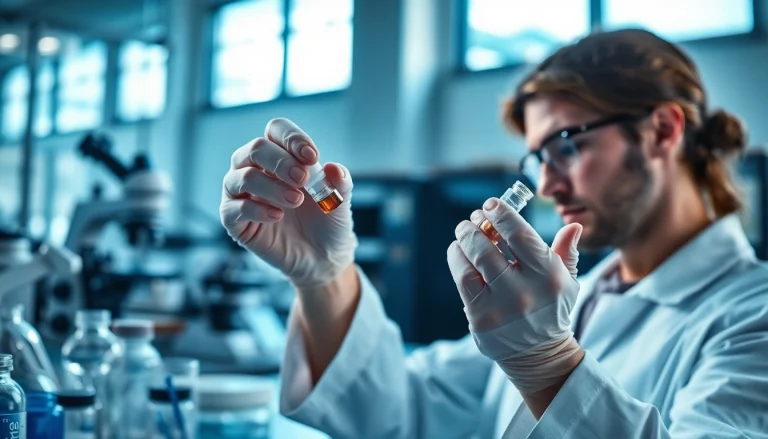
Introduction to Research Peptides
Defining Peptides and Their Importance
Peptides are short chains of amino acids that serve as the building blocks for proteins. Comprised of anywhere from two to fifty amino acids, they play a significant role in various biological functions, including hormone regulation, immune response, and cell signaling. In recent years, peptides have garnered attention in biomedical research and therapeutic development due to their specificity and potency in targeting biological pathways. Their importance cannot be overstated, as they offer a promising avenue for tailored therapeutic interventions in a range of medical conditions.
Applications of Research Peptides in Medicine
Research peptides have a myriad of applications across various fields of medicine, from oncology to endocrinology. In cancer therapy, certain peptides are being studied for their ability to selectively induce apoptosis in tumor cells while sparing healthy cells. Similarly, in the realm of endocrinology, peptides like insulin and glucagon-like peptides are crucial in managing diabetes and metabolic disorders. The versatility of peptides allows for innovation in drug design, resulting in novel medications that can address previously challenging conditions with reduced side effects.
Key Benefits of Using Peptides in Therapy
The primary benefits of using peptides in therapy include their high specificity, lower side effects, and potential for oral bioavailability. Unlike traditional small molecules, peptides are designed to interact with specific receptors, resulting in targeted actions. This specificity minimizes off-target effects and enhances the safety profile of therapeutic agents. Additionally, many peptides can be formulated for oral delivery, providing a convenient alternative to injections. As research continues to deepen our understanding of peptide biology, the therapeutic landscape is rapidly evolving.
Understanding Bacteriostatic Solutions
What is Bacteriostatic Water?
Bacteriostatic water is a sterile water solution that contains a small percentage of benzyl alcohol, which prevents the growth of bacteria. This solution serves as a solvent for medications that require dilution before administration. It is particularly valuable in research settings where maintaining sterility and preventing contamination is paramount. The formulation allows the solution to be used multiple times, which is beneficial in peptide research where accurate dosing is critical.
Why Bacteriostatic Water is Essential for Research?
The use of bacteriostatic water in research is critical for promoting sterility and minimizing contamination during experiments involving peptides and other sensitive biological materials. Researchers depend on this solution to prepare peptide solutions without introducing harmful microorganisms. Its ability to inhibit bacterial growth extends the shelf life of the prepared solutions, making it a practical choice for labs that handle multiple compounds regularly.
Differences Between Bacteriostatic and Sterile Water
While both bacteriostatic and sterile water serve as diluents, their formulations and uses differ significantly. Sterile water is devoid of any additive agents and is primarily used for the immediate preparation of solutions. In contrast, bacteriostatic water contains benzyl alcohol, which offers protection against microbial growth, allowing it to be used multiple times without compromising sterility. This distinction is crucial in settings where maintaining the integrity of peptide solutions is essential.
Working with Bacteriostatic Water
Preparation and Handling Guidelines
When preparing peptide solutions with bacteriostatic water, it is essential to maintain a sterile environment. Start by ensuring that all surfaces and equipment are sanitized, including vials, syringes, and needles. Once the workspace is sterile, prepare the peptide by following the manufacturer's instructions for dilution. Use a sterile syringe to draw up the bacteriostatic water, and slowly inject it into the peptide vial to prevent foaming. After mixing, ensure that the solution appears uniform before storage.
Dosage Considerations for Research Applications
Proper dosage is fundamental when working with peptides, as even small variations can significantly affect research outcomes. Familiarize yourself with the recommended dosing parameters for the specific peptide being used, including both the concentration and total volume. For precise administration, analytical scales or calibrated syringes should be used to measure doses accurately. Additionally, be aware of how the stability of peptides may vary with each preparation and adjust handling accordingly to maintain effectiveness.
Storage Best Practices for Maximum Efficacy
Storage conditions greatly affect the efficacy and stability of peptide solutions. Once prepared, solutions using bacteriostatic water should be stored in a cool, dark location to minimize degradation from light and temperature fluctuations. A dedicated refrigerator is ideal to maintain a consistent temperature. It is essential to label all containers clearly and record the preparation date, as most peptides have a finite shelf life that must be respected for optimal results.
Safety and Compliance in Peptide Research
Regulatory Standards for Using Bacteriostatic Water
Compliance with regulatory standards is crucial when utilizing bacteriostatic water in research settings. Regulations governing the use of sterile and bacteriostatic solutions vary by region, but generally, institutions must adhere to guidelines established by agencies such as the FDA or EMA. It is important to follow Good Laboratory Practices (GLPs) to ensure that the use of bacteriostatic water does not lead to contamination or compromise research integrity.
Preventing Contamination in Research Settings
Preventing contamination in laboratory settings involves implementing a series of stringent protocols. This includes regular maintenance of sterile environments, using personal protective equipment (PPE), and employing aseptic techniques during all research practices. Additionally, staff should be trained in recognizing the signs of contamination and protocols for responding effectively to suspected cases.
Best Practices for Lab Safety
Lab safety is paramount in any research environment. Best practices include conducting regular safety audits, maintaining clear communication about potential hazards, and ensuring that emergency protocols are well-established and practiced. Furthermore, researchers should familiarize themselves with Material Safety Data Sheets (MSDS) pertinent to the chemicals and solvents being used. Establishing a culture of safety not only protects individuals but also enhances the overall integrity of the research process.
Future Trends in Peptide Research
Innovative Uses for Bacteriostatic Water
As research into peptides continues to advance, innovative uses for bacteriostatic water are emerging. For instance, researchers are exploring its application in personalized medicine, where bespoke therapies are designed for individual patient profiles. Additionally, the potential for bacteriostatic water to preserve the integrity of cellular therapies is being investigated, potentially revolutionizing applications in regenerative medicine.
Emerging Peptide Therapies in Clinical Trials
The landscape of peptide therapies is expanding, with numerous candidates currently in clinical trials. From treatments targeting rare genetic disorders to novel cancer therapies, the variety highlights the versatility of peptides as therapeutic agents. Moreover, ongoing research aims to improve the pharmacodynamics and pharmacokinetics of peptide-based drugs, increasing their effectiveness and widen their applications across different medical fields.
Forecasting the Need for Bacteriostatic Solutions
With the increasing reliance on peptide therapies and research, the demand for bacteriostatic solutions like bacteriostatic water is expected to rise. As new peptides are developed and explored, understanding their specific handling and storage needs becomes ever more critical. This emphasizes the need for robust supply chains for bacteriostatic solutions to support research and clinical practices effectively.
Frequently Asked Questions
What is the shelf life of bacteriostatic water?
Bacteriostatic water typically has a shelf life of up to 28 days once opened, but it is crucial to refer to specific manufacturer guidelines for details.
Can I use bacteriostatic water for reconstituting all peptides?
Not all peptides are compatible with bacteriostatic water; always check the peptide-specific protocols for suitable solvents.
How should bacteriostatic water be stored?
Store bacteriostatic water in a cool, dark place, preferably a refrigerator, and ensure containers are properly labeled to track expiry dates.
Is bacteriostatic water safe for multiple uses?
Bacteriostatic water is designed for multiple uses as long as sterile handling techniques are followed to prevent contamination.
What is the main ingredient in bacteriostatic water?
The main ingredient in bacteriostatic water is sterile water, with the addition of 0.9% benzyl alcohol to inhibit bacterial growth.